

In 2025, the forest that appeared in Osaka was not an answer, but a question.
The Forest of Resonance Institute carries this philosophy forward,
handing the question to the next generation.
Forest of Resonance Institute (FoR)


The Forest of Resonance Institute (FoR) is a platform for carrying forward the questions raised by the Forest of Tranquility and the Better Co-Being Pavilion at Expo 2025 Osaka, Kansai, Japan, and translating diverse possibilities for the future into real-world practice beyond the Expo.
Through four pillars—ecosystem conservation, culture and the arts, next-generation education, and international collaboration—FoR works with companies, governments, civil society, and research institutions on activities that connect the environment, human rights, health, peace, and education.

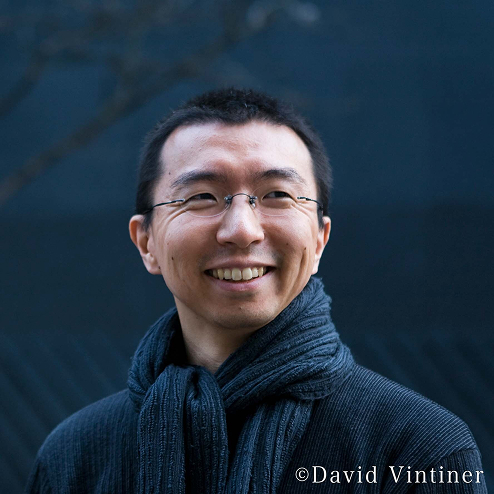
Co-Representative Director
Sou Fujimoto
Co-Representative Director, Forest of Resonance Institute
Architect / Site Design Producer, Expo 2025 Osaka, Kansai, Japan

Co-Representative Director
Hiroaki Miyata
Co-Representative Director, Forest of Resonance Institute
Professor, Keio University School of Medicine
Specializing in data science and value co-creation
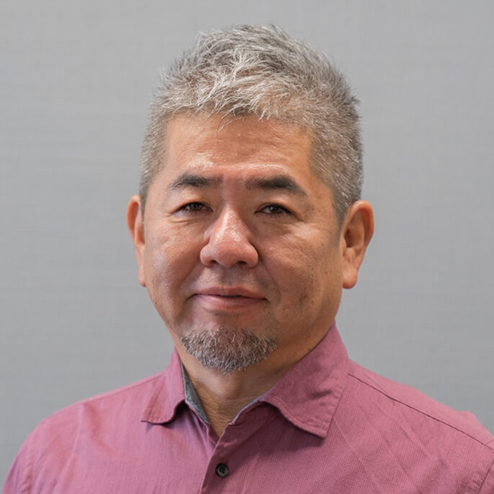
Managing Director, Forest of Resonance Institute
Hiroki Kutsuna
Managing Director, Forest of Resonance Institute
Landscape Architect / Professor Emeritus, Osaka City University
From the mission of the Expo to systems and practice.
As a platform for resonance that brings together nature, technology, culture, food, and education, FoR works with companies, governments, and civil society to translate ideas into real-world practice and promote the development of new social models.
Guided by the philosophy of the Expo, FoR seeks to realize a society of resonance that connects local communities and the world. We aim to transform the questions raised by the Expo into lasting systems and culture, and to cultivate a knowledge ecosystem for the future society.
On a 2.3-hectare site, more than 1,500 trees transplanted from across Osaka took root. Designed by Sou Fujimoto, this architecture without walls or a roof became a place where works by artists from around the world continued to transform with the seasons and the weather.
The Forest of Tranquility was not only a pavilion, but also an ecosystem. It was a place where time moved beyond human intention. That experience is the starting point of FoR.
A Place Where Life Enters into Dialogue
Designed together with architect Sou Fujimoto, this space was an unprecedented ecological art field where works by internationally renowned artists resonated with the forest.
It was designed not as a mere exhibition, but as a place of inquiry where people and nature, people and people, and people and the Earth could engage in quiet dialogue.
Modern society has long been designed around economic prosperity. Today, however, we must ask that assumption anew. Better Co-Being is a shift toward a society centered on the environment, human rights, health, peace, and education. Rather than optimizing isolated individuals, it explores a way of society in which each life shines together while resonating with others.
FoR advances real-world practice in collaboration with business, government, and civil society,
with the following four areas at the core of its activities.
01
CONSERVATION
Ecosystem monitoring of transplanted trees, urban greening projects, and the collection and public sharing of environmental data using IoT and AI.
02
EDUCATION
Development and implementation of resonance-based STEAM education programs for the post-AI era.
03
CULTURE, ARTS & SOCIETY
Ongoing collaborative projects with artists who participated in the Expo, as well as the planning of exhibitions and performances in Japan and overseas.
04
INTERNATIONAL NETWORK
Collaboration with international organizations, NGOs, and research institutions, and the operation of global platforms for dialogue.
FoR is launching an award initiative that carries forward the philosophy of the Expo by recognizing initiatives that carry forward the questions raised by the Expo and translate them into new practices in society. Through this Award, FoR seeks to ensure that the questions of the Expo do not end as a temporary moment, but instead grow into lasting social momentum.
01
Call for Entries: Under eight application themes aligned with the Expo Theme Weeks, the Award invites all forms of challenges and attempts that contribute to the co-creation of future society.
02
Evaluation: Entries will be evaluated through three stages—document review, public presentation, and final review. Experts with knowledge and experience in fields such as academia, government, industry, culture, and creativity will assess the initiatives from multiple perspectives.
03
Recognition and Communication: The Award will recognize initiatives through distinctions such as the Grand Prix and Theme Special Awards. Award-winning and finalist initiatives will be shared widely with society through a Casebook and other communication channels.
04
Accumulation and Expansion: By building a network of award recipients, FoR will cultivate an ecosystem of resonance that mutually supports attempts to question social assumptions and transform values.
Transformation: — attempts to question existing frameworks and propose new measures of value.
Challenge: — an attitude of continuing to face essential questions, even when the attempt is still evolving.
Resonance: — unexpected emergence born from the intersection of different fields, cultures, and generations.
Dialogue with Expo Producers and Experts: Through the award ceremony and related programs, the Award will provide opportunities for dialogue and feedback with Signature Pavilion producers who led the Expo and with expert judges.
Opportunities for Exchange among Award Recipients: Through the award ceremony and related programs, the Award aims to create opportunities for recipients with shared aspirations to meet, exchange ideas, and share their questions and challenges.
Communication and Public Outreach: Initiatives will be introduced through the website, Casebook, and other channels, recording the questions and learnings they generate as wisdom for the future and sharing them in Japan and overseas.
Recognition as a Symbol of Continuity : Recipients are expected to be offered opportunities to use the Award logo and to receive trophies or certificates as symbols that carry the memory of the Expo into the future.
Future
Continued accumulation of Casebooks, formation of award recipient networks, exhibitions, and expansion of international networks.
If you are interested in FoR’s activities, partnership opportunities, project participation, or newsletter registration, please feel free to contact us.